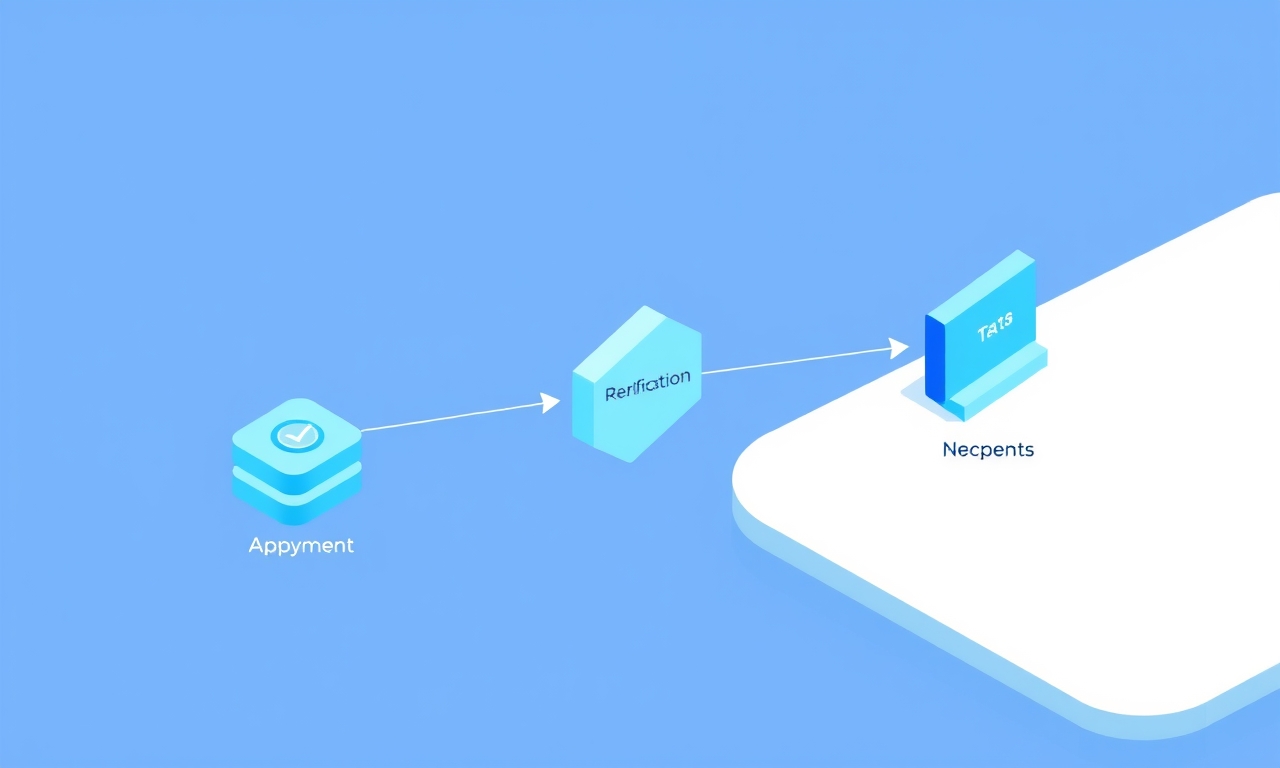
Key Takeaways
- Scalability is an architectural property, not a staffing outcome. Treat workflows as deterministic state machines rather than managed conversations.
- Financial settlements must bind programmatically to verification states. This eliminates dispute overhead and enforces contract terms automatically.
- Localization and multi-currency support must exist as data primitives. UI overlays alone cause legal-financial decoupling in global campaigns.
- Verification latency drives creator churn. Optimize for instant, deterministic feedback over human nuance to retain top talent.
Table of Contents
- The Scalability Ceiling: Why Headcount Doesn’t Solve Operational Drag
- Defining the Workflow as a Deterministic State Machine
- Binding Financial Settlements to Workflow Verification
- Native Multi-Currency and Localization as Data Primitives
- Automated Compliance Verification at Scale
- Integrating Communication Without Surrendering Structure
- Measuring Workflow Health Beyond Campaign ROI
- Building vs. Buying: When Custom Workflow Architecture Is Mandatory
- Common Mistakes to Avoid
- Frequently Asked Questions
- Further Reading
The Scalability Ceiling: Why Headcount Doesn’t Solve Operational Drag
Hiring more coordinator staff will not fix your broken influencer workflow. Most teams believe their bottleneck is finding good creators. The data shows the actual ceiling is the cognitive load required to maintain state across unstructured channels.
Identifying "Context Reconstruction" as the Primary Bottleneck
In 2026, we see a clear tax on stateless workflows. Influencer marketing teams managing over 50 concurrent creators without a persistent state machine lose significant weekly capacity to context reconstruction. Staff re-read old threads. They verify deliverable versions manually. They re-confirm terms that should remain immutable.
This is not a people problem. It is a structural failure. You cannot hire your way out of bad architecture. Every new coordinator adds another node to an already fragile communication graph. Complexity increases non-linearly with every person added to a stateless system.
The Difference Between Managing Creators and Managing Transaction States
You are not managing personalities. You are managing transaction states. A creator submitting content is not a social interaction. It is a state transition event. Treating it as a conversation introduces ambiguity where you need precision.
When you view operations through this lens, the solution changes. You stop looking for better project managers. You start looking for better state definitions. This distinction separates artisanal agencies from industrial platforms. Read our analysis on The Operational Workflow That Makes or Breaks a [Creator Marketplace] to understand why workflow design must precede hiring.
Why Adding More Coordinators Exponentially Increases Error Rates
Scaling headcount often accelerates failure. Two coordinators might handle 30 creators fine. Five coordinators handling 100 creators will generate more disputes than the original two. Information silos form instantly. Verbal agreements contradict written terms.
The system lacks a single source of truth. Human memory becomes the database. This fails predictably under load. True scale requires removing human memory from the critical path entirely.
Defining the Workflow as a Deterministic State Machine
A scalable workflow treats approval as a boolean condition. It derives this condition from multiple verified inputs. If the system cannot programmatically determine if a state transition is valid, the workflow remains artisanal.
Mapping Creator Journeys to Discrete, Verifiable States
Vague statuses kill velocity. "In Review" means nothing. Does it mean pending human check? Pending automated scan? Pending brand approval? You must map journeys to discrete states. Use labels like AWAITING_ASSET_METADATA, COMPLIANCE_CHECK_PASSED, or ESCROW_RELEASE_TRIGGERED.
Each state has strict entry and exit criteria. No state exists without defined boundaries. Ambiguity is a bug. Eliminate it at the schema level.
Eliminating Ambiguity in "Pending," "Approved," and "Complete"
Fuzzy project management tools encourage lazy thinking. They allow subjective status updates. Deterministic architectures forbid them. A task is not complete because someone clicked a button. It is complete because specific conditions returned true.
This parallels how we approach autonomous systems. In [Engineering Reliable Multi-Agent Meetings: State Machines Over Autonomy], we discuss why structure beats open-ended generation. The same logic applies here. Reliability comes from constraints, not freedom.
Encoding Business Rules Directly Into Transition Logic
Business rules belong in code, not policy documents. If a creator must have 10k followers to qualify for Tier B, encode that check. Do not rely on a coordinator remembering the threshold.
Hardcode the logic into the transition function. The system rejects invalid transitions automatically. This prevents policy drift. It ensures the platform operates identically at 1 AM and 1 PM. Consistency builds trust faster than charm.
Binding Financial Settlements to Workflow Verification
Disputes rarely stem from bad faith. They usually result from misaligned state. When payment release is architecturally impossible until verification criteria are met, you eliminate negotiation.
Escrow as a Programmatic Trigger, Not a Bank Account
Platforms treating escrow solely as a financial safety net see significantly higher dispute rates. Escrow must function as workflow logic. Payment release should bind directly to verified asset metadata. Check the aspect ratio. Validate the caption. Confirm the live URL.
Do not wait for manual approval. Bind the payout to the verification event. This transforms escrow from a passive vault into an active enforcement mechanism.
Reducing Dispute Volume Through Atomic Transactions
Operational overhead drops substantially at scale when payments link to state. The system executes atomic transactions. Either all conditions pass and funds release, or they fail and funds stay locked. There is no middle ground.
This removes the gray area where disputes breed. Creators understand binary outcomes. They argue less with code than with humans. Read [The Hidden Infrastructure Costs of Creator Marketplaces] to see what happens when you ignore this integration.
Designing Payout Logic That Cannot Be Executed Prematurely
Premature payouts destroy leverage. Design logic that physically prevents early execution. The database schema should lack a field for "manual override" on verified payments.
Make exceptions require engineering intervention, not admin clicks. High friction for exceptions ensures they remain rare. Protect the integrity of the state machine above convenience. Convenience is the enemy of scale.
Native Multi-Currency and Localization as Data Primitives
Localization is a legal layer, not a UI layer. A translated contract that fails to map to underlying currency logic creates liability. This liability scales linearly with volume.
Why Translation Plugins Fail for Contractual Enforcement
Every additional currency or language added to a non-native stack increases error rates. Third-party conversion APIs decouple legal terms from financial execution. The contract says one thing. The payment processor does another.
Translation plugins only change display text. They do not alter data models. This gap causes breaches. You cannot patch legal compliance with a localization library.
Structuring Financial Models for Currency-Agnostic Logic
True scalability requires baking currency logic into the data model. Store values in base units. Apply conversion at the transaction moment, not the display moment. Link exchange rate snapshots to specific contract versions.
At Lumorabuild, we engineered our internal marketplace reference architecture with native support for multiple languages and currencies from day one. We treated these as primitives. This prevented the drift that plagues retrofitted platforms. Retrofits always leak edge cases.
Preventing Legal-Financial Decoupling in Global Campaigns
Legal and finance must share the same object reference. A change in currency precision must trigger a contract review flag. A localized term update must validate against payment schemas.
Decoupling these systems invites disaster. Keep them tightly bound in your architecture. Global programs fail when translation outpaces validation. Ensure your data model enforces synchronization.
Automated Compliance Verification at Scale
Creators prefer strict, instant rejection over delayed approval. Uncertainty damages retention more than rigidity. Verification latency predicts churn better than payout rates.
Shifting from Human Review to Metadata Validation
Human review does not scale. Shift to metadata validation. Check file sizes, formats, and tags programmatically. Verify link destinations and landing page status codes.
Reserve humans for subjective quality checks only. Automate everything objective. This clears the queue. It provides immediate signals to creators. Speed matters more than perfection in feedback loops.
Providing Instant, Deterministic Feedback to Creators
Automated pipelines providing instant feedback retain creators at higher rates than asynchronous human review. Tell creators immediately if an asset fails. Give them the exact reason.
Do not make them wait days to hear "wrong format." Respect their time. Deterministic feedback feels fair. Delayed human feedback feels arbitrary. Fairness drives loyalty.
Balancing Automation Rigor with Creative Flexibility
Rigor protects the platform. Flexibility attracts talent. Balance these by separating compliance from creativity. Enforce technical specs ruthlessly. Allow creative expression within those bounds.
Apply verification-first principles to user-generated content just as you would documentation. See [Verification-First Content Architecture for SaaS Documentation] for this methodology. Structure enables freedom. Chaos restricts it.
Integrating Communication Without Surrendering Structure
Allowing communication outside the workflow corrupts the state machine. Untracked variables enter the system. Side-channel negotiations invalidate platform records.
Treating Messages as Events Within the State Machine
Messages are data. Treat them as events. A message containing "approved" should trigger a state change. A question about deadlines should update the SLA timer.
Parse communication structurally. Do not store it as unstructured text blobs. Make chat functional, not just conversational. This turns talk into actionable system input.
Preventing Side-Channel Negotiations From Corrupting Data
DMs and personal emails create shadow ledgers. These ledgers contradict the official record. Ban side-channel negotiations for business terms. Enforce this via platform design.
Disable external links in negotiation phases. Flag keywords associated with off-platform deals. Structured communication must be the only valid input method. Integrity requires exclusivity. Read [Stop Treating Email Like a Bulletin Board: Architecting Agentic Communication] for more on structured messaging.
Archiving Context Automatically for Audit and Dispute Resolution
Auto-archive every state-linked message. Tag it with the relevant transaction ID. Make retrieval instant during disputes.
Manual archiving fails. Humans forget. Systems do not. Complete audit trails protect both parties. They turn he-said-she-said into deterministic resolution. Trust relies on verifiable history.
Measuring Workflow Health Beyond Campaign ROI
ROI tells you if the campaign worked. Workflow metrics tell you if the business survives. Profitable campaigns can mask insolvent operations. Hidden operational debt accumulates silently.
Tracking State Transition Velocity and Blockage Rates
Measure time spent in each state. Identify bottlenecks. If assets sit in COMPLIANCE_REVIEW for 48 hours, investigate.
Track blockage frequency. How often do transitions fail? High failure rates indicate poor UX or unclear requirements. Fix the path, not the people. Velocity reveals systemic health.
Monitoring Verification Latency as a Leading Indicator
Verification latency leads churn. Monitor it obsessively. Set alerts for threshold breaches.
Average response time is a vanity metric. Average time in specific states is actionable. Optimize for flow, not speed. Flow generates sustainable volume.
Auditing Exception Handling Frequency
Exceptions are debts. Track how often manual overrides occur. Each override represents a missing feature or flawed rule.
High exception volume signals architectural decay. Prioritize fixes based on exception frequency. Reduce manual touches systematically. Clean workflows compound value. See [Measuring In-House Product Studio ROI Beyond Agency Velocity] for broader measurement philosophy.
Building vs. Buying: When Custom Workflow Architecture Is Mandatory
The break-even point for custom architecture is complexity-based, not revenue-based. Once your logic diverges from platform defaults, SaaS tools become a tax.
Identifying the Threshold Where Generic Tools Become Liabilities
Generic tools assume standard workflows. Your marketplace likely is not standard. Adaptation costs accumulate. Workarounds break with updates.
Identify when configuration limits hit. If you need custom code to enforce basic terms, you have outgrown the tool. Recognize this threshold early. Delaying migration increases technical debt.
The Cost of Adapting Your Process to Software Constraints
Adapting process to software kills differentiation. Your unique value lies in your specific workflow. Generic tools force conformity.
Conformity erodes moats. Preserve your operational sovereignty. Build what makes you distinct. Off-the-shelf solutions solve generic problems. You need specific solutions.
Evaluating Vendor Lock-In Against Operational Sovereignty
Vendor lock-in restricts evolution. Platform roadmaps dictate your capabilities. Own your critical path.
Custom architecture grants sovereignty. It allows rapid iteration. It aligns software with business reality. Read [Why 'Built From Scratch' Is the Only Real Moat for Your Product] and [The Architect’s Advantage] to understand this strategic choice. Sovereignty enables long-term survival.
Common Mistakes to Avoid
- Treating Escrow as Passive: Using escrow only for safety rather than as an active workflow enforcement mechanism creates operational drag. Funds sit idle while humans negotiate terms the system should have enforced automatically.
- Allowing Unstructured Side Channels: Permitting negotiations via DM or email breaks state machine integrity. Shadow agreements undermine platform authority and create unresolvable disputes during audits.
- Optimizing for Acquisition Over Retention: Focusing on top-of-funnel volume while ignoring verification latency causes churn. Acquiring creators is expensive; losing them to slow feedback loops is wasteful. Retention proves workflow health.
Frequently Asked Questions
How do we migrate existing influencer relationships into a state-machine workflow without disruption?
Run parallel systems temporarily. Map legacy statuses to new states explicitly. Communicate changes as upgrades, not restrictions. Provide instant wins through faster approvals. Migration succeeds when creators perceive immediate value, not just administrative burden.
Can AI agents replace human reviewers in influencer compliance verification?
AI excels at objective metadata validation. It struggles with subjective brand alignment. Use AI for technical compliance and first-pass filtering. Reserve humans for nuanced creative judgment. Hybrid models outperform pure automation or pure human review.
What is the minimum viable state definition for a simple influencer campaign?
Define four core states: BRIEF_ACCEPTED, ASSET_SUBMITTED, VERIFICATION_PASSED, and PAYMENT_RELEASED. Add granularity only when friction appears. Premature optimization complicates adoption. Start simple and iterate based on blockage data.
How do we handle creative exceptions that don't fit predefined workflow states?
Create a dedicated EXCEPTION_REQUEST state. Require structured justification. Route exceptions to senior reviewers only. Log every exception as a potential future state. Exceptions inform roadmap priorities rather than bypassing rules.
Does structuring workflows this rigidly discourage high-tier creators from participating?
Top creators value professionalism over casual flexibility. Clear expectations reduce anxiety. Fast payments build loyalty. Rigidity in process enables reliability in outcomes. Professionals prefer predictable systems to chaotic negotiations.
Further Reading
- The Operational Workflow That Makes or Breaks a Creator Marketplace
- Engineering Reliable Multi-Agent Meetings: State Machines Over Autonomy
- State of Influencer Marketing Operations 2026 Report
If your current workflow relies on spreadsheets and hope, it is time to rebuild. Explore how Lumorabuild approaches digital product architecture at https://www.lumorabuild.com/.