Key Takeaways
- Automate the grunt work, not the craft. Focus automation on research, formatting, and first drafts. Keep strategy, fact-checking, and narrative voice in human hands.
- Build a prompt library, not a single prompt. Version control your prompts like code. Separate role prompts from format prompts for more reliable output.
- Prioritize entity depth over keyword volume. Google's 2026 updates reward comprehensive topic coverage. Your automation must map to entity clusters, not just keyword lists.
- Measure efficiency, not volume. Track "Content Efficiency Ratio" and "Human Value Add" instead of words published or number of posts.
Table of Contents
- The Automation Paradox
- Audit Your Content Funnel Before You Automate a Single Word
- Build Your Prompt Library Like a Codebase
- Automate Research, Not Just Writing
- The Draft, Review, Refine Loop
- Automate Distribution, But Not Engagement
- Measure the Right Metrics
- Common Mistakes to Avoid
- Frequently Asked Questions
- Further Reading
The Automation Paradox
Most content teams won't admit this. They automated the wrong things first.
I've watched teams grab the hottest AI writing tool, type in a keyword, and smash "generate." Three months later? Two hundred blog posts. All reading like they came from the same bored intern. Traffic flat. Brand voice dead. Team morale? Worse than before.
Automation isn't the problem. The problem is flipping it on like a light switch instead of building a system.
Here's the blunt truth: content automation shouldn't replace writers. It should kill the grunt work. Research. Formatting. Basic drafting. All that stuff that drains creative energy. Your writers should spend time on strategy, narrative, and fact-checking — not CMS formatting and keyword stuffing.
A 2025 Gartner survey found that 63% of marketing leaders who tried end-to-end content automation saw quality drop within six months. Why? "Generic tone" and "loss of brand voice nuance." They automated the entire process. Quality was an afterthought.
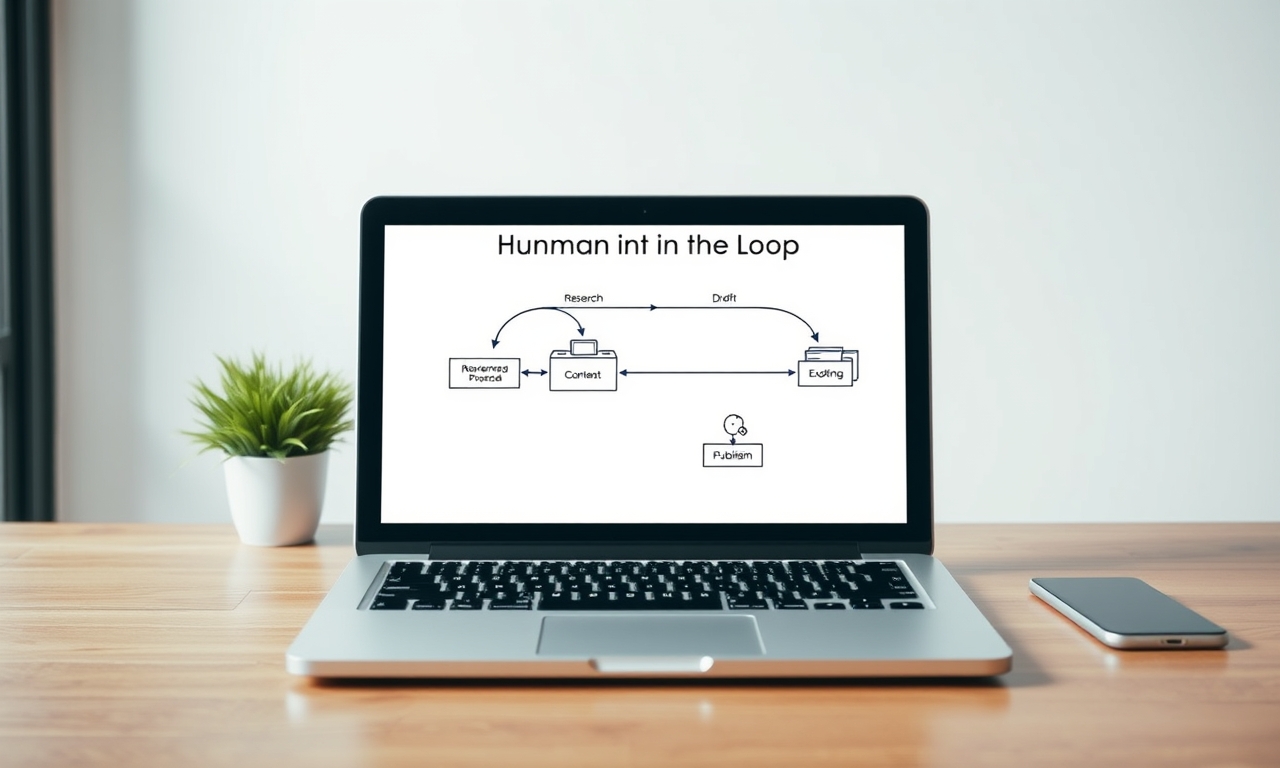
Here's what most people miss: the teams winning at content automation aren't running fully autonomous systems. A 2026 Content Marketing Institute report showed that 78% of high-growth content teams use a "human-in-the-loop" model. AI drafts. Humans edit. The real differentiator isn't output volume. It's how fast that loop runs.
This is the philosophy behind everything we build at Lumora Build. Systems that are powerful. Never at the expense of quality.
Step 1: Audit Your Content Funnel Before You Automate a Single Word
Map the Manual Bottlenecks
Don't touch a single AI tool yet. First, understand where your time actually goes.
Pull your team together. List every task for one piece of content. Keyword research. Brief writing. First draft. Image sourcing. Fact-checking. CMS formatting. Meta description writing. Internal linking. Publishing. Distribution.
Now track minutes per task. I guarantee 80% of your time goes to 3–5 tasks. Those are your automation targets.
Here's the trap: don't automate a broken process. Vague, inconsistent content briefs? Automating the writing just produces bad content faster. You'll get 50 poorly researched posts instead of 5.
Define Your Quality Floor
Every piece of content needs a minimum standard. Call it your quality floor. Nothing gets published unless it meets every criterion.
What belongs on your quality floor? Three non-negotiables I've seen work:
- Must cite at least 2 external sources
- Must have a unique angle not found in the top 5 search results
- Must pass a brand voice tone check
One SaaS company I worked with automated blog creation but forgot a "no hallucinated statistics" rule. They published a post with a fake stat from a "study" that didn't exist. The fix was brutal: a mandatory fact-checking step. Every number. Every "according to" phrase. Every citation got flagged for human review.
Your quality floor protects you from your own automation.
Step 2: Build Your Prompt Library Like a Codebase
Version Control Your Prompts
Most teams write one prompt, tweak it endlessly, and wonder why output is inconsistent. That's like editing code without version control. No idea what changed, when it changed, or why it broke.
Treat prompts like software. Use a simple naming system. Something like v1.2-blog-intro-v2 or v2.1-customer-story-outline. Track every change. When you update a prompt, note what changed and why.
Then A/B test against a control. Run the same topic through two prompt versions. Compare output. Which sounds more like your brand? Which needs less editing? The data tells you what works.
Create Role and Format Prompts
Here's the biggest mistake I see: cramming everything into one massive prompt.
"Write a blog post about X. Use a professional tone. Include 3 statistics. Format it with H2s. Make it 1500 words. Cite sources. Oh, and make it sound like our brand."
That prompt is fragile. Change one element, the whole thing breaks. Debugging it is a nightmare.
Instead, separate prompts into two categories:
Role prompts define who the AI is. "You are a technical SEO analyst with 10 years of experience." "You are a customer success manager who speaks directly to founders."
Format prompts define what the AI should output. "Write a 150-word H2 section on entity-based SEO. Use a conversational tone. Include one specific example."
Small, specific prompts are robust. A single massive prompt is fragile. Just as our platform structures meeting participants with specific roles, your prompt library must assign specific roles to your AI agents.
Step 3: Automate Research, Not Just Writing
The Entity Cluster Research Loop
Google's 2026 "Entity-First" update changed everything. A study by Search Engine Land showed that pages covering a single topic with deep, interlinked entity relationships outranked high-volume, shallow automated content by 4:1.
What does this mean for your automation? Stop optimizing for single keywords. Start optimizing for entity clusters.
Here's the workflow: scrape Google's "People Also Ask" and "Related Searches" for your target keyword. Map those into a cluster of related entities. Then generate content that covers the entire cluster — not just the single keyword.
Example: writing about "escrow payments"? Your entity cluster should include "cross-border creator contracts," "multi-currency compliance," and "payment dispute resolution." Cover all of them in one piece. That's entity depth.
Source Validation Automation
AI models hallucinate. Not a bug — it's a feature. They predict the next word based on patterns, not truth.
Your automation must include a source validation step. Build a simple script that flags any sentence containing a number, a percentage, or a phrase like "according to." Every flagged sentence goes to a human for verification.
This step alone saves you from publishing false information. And it protects your credibility. One fake stat can undo months of trust-building.
Step 4: The Draft, Review, Refine Loop
The 3-Pass Review System
The best content teams use a three-pass review system. Each pass has a specific purpose.
Pass 1 (Machine): Grammar, readability, keyword density, and formatting checks. Let the AI catch the obvious stuff. Misspelled words. Passive voice. Missing headers.
Pass 2 (Human Editor): Fact-checking, tone adjustment, narrative flow, and adding proprietary insights. This is where the magic happens. The editor adds the unique perspective no AI can generate.
Pass 3 (Machine): Final SEO optimization. Meta descriptions. Alt text. Internal link suggestions. Let the machine handle the technical details.
The No Raw Output Rule
Never publish an AI's first draft. Period.
The editor's job is to add value, not just remove errors. If your editor is only fixing typos and grammar, your automation is failing. The editor should be restructuring paragraphs, adding examples, challenging assumptions, and injecting real experience.
Hard truth: the best editors for automated content are subject-matter experts, not generalist writers. A generalist can fix grammar. A subject-matter expert spots the subtle inaccuracy a generalist would miss. They know when the AI is confidently wrong.
Step 5: Automate Distribution, But Not Engagement
The Repurpose First Strategy
This is where automation saves the most time. One long-form post becomes three social snippets, one email summary, and one slide deck. Automate the repurposing, not the creation.
Set up templates for each format. A Twitter thread template. An email newsletter template. A LinkedIn carousel template. Feed your long-form content through each template. The AI handles formatting and restructuring. You handle the strategic decisions — which angle to lead with.
The Manual Reply Mandate
Here's the line you don't cross: automate the scheduling of social posts, but never automate the replies.
A generic AI reply to a thoughtful comment destroys brand trust instantly. People smell a bot reply from a mile away. "Thanks for your comment! We appreciate your feedback." That's not engagement. That's noise.
Just as our platform automates the discovery and vetting of creators but leaves relationship management to humans, your content distribution should automate the broadcast, not the conversation.
Step 6: Measure the Right Metrics
Stop Measuring Words Published
Words published is a vanity metric. Tells you nothing about whether your content is working.
Instead, measure "Content Efficiency Ratio" — time spent divided by traffic generated. A piece that took 4 hours to produce and generated 1,000 visitors has a ratio of 0.004. A piece that took 20 hours and generated 500 visitors has a ratio of 0.04. The first piece is more efficient, even though it took less time.
Also measure "Entity Coverage Score" — how many related topics did this piece cover? A piece covering 8 related entities is more valuable than one covering 2, even if the shorter piece ranks for the primary keyword.
Track the Human Value Add
Track the percentage of content the human editor changes. If it's less than 20%, your prompts are too good — or your standards are too low.
A healthy system produces drafts that are 60–70% usable. The editor adds the remaining 30–40% in strategic value. If your editors rewrite everything, your prompts need work. If they change nothing, your quality floor is too low.
The real ROI of automation isn't cheaper content. It's faster iteration. You can test 5 angles on a topic in a week instead of a month. That speed lets you find winners faster and double down on what works.
Common Mistakes to Avoid
1. Automating the Review Process
The most common mistake is treating human review as a rubber stamp. If your editor is just fixing typos, your system is broken. The review must add strategic value. Every piece should be better after human review than before it.
2. Using a Single Monolithic Prompt
This is fragile and produces inconsistent output. A stack of small, specific prompts is far more reliable and easier to debug. One prompt for tone. One for structure. One for research. Each one can be tested and improved independently.
3. Neglecting the Source Validation Step
AI models hallucinate. If your automation doesn't include a mandatory check for verifiable facts and statistics, you will publish false information. That destroys credibility faster than anything else. Build the validation step into your workflow before you publish a single piece.
Frequently Asked Questions
How do I start automating content without overwhelming my team?
Start with one task. Pick the single most time-consuming manual task in your workflow — probably research or first-draft writing. Automate that one thing. Get comfortable with it. Then add the next task. Trying to automate everything at once guarantees chaos.
What is the best AI model for content automation in 2026?
There's no single best model. The smartest teams use multiple models for different tasks. One model for research and summarization. Another for creative drafting. A third for editing and formatting. Match the model to the task.
How do I prevent automated content from sounding robotic?
Inject your brand voice into every prompt. Create a "brand voice document" that defines your tone, vocabulary, and sentence structure preferences. Feed that document into your prompts. Then have a human editor adjust the output. The combination of structured prompts and human editing produces natural-sounding content.
Can I fully automate content creation for a technical SaaS product?
No. Technical content requires accuracy that AI can't guarantee. You can automate research, formatting, and first drafts. But every technical claim needs human verification. The stakes are too high for hallucinations.
How do I handle multilingual content automation?
Translate your prompts, not just the output. A prompt that works in English may produce terrible results in Japanese or Spanish. Invest in native-speaking editors for each language. Automation handles the heavy lifting. Humans handle the cultural nuance.
Further Reading
- The Publishing Platform Paradox — Why the platform matters less than the process
- Content Marketing Institute: Human-in-the-Loop Workflows — Research on the most effective content automation models
Build Your Content Automation Stack
You now have the blueprint. Six steps. Each one deliberate. Each one with a quality gate.
The teams that win are not the ones that automate the most. They are the ones that automate the right things and leave the important things to humans.
Start with the audit. Map your bottlenecks. Define your quality floor. Then build your prompt library one prompt at a time. Test everything. Measure what matters.
This is the philosophy behind everything we build at Lumora Build: systems that are powerful, but never at the expense of quality. Every line of code, every pixel, every decision is made internally. We build from scratch because we believe craftsmanship matters.
Ready to build your content automation stack? Let's talk about your system.