Key Takeaways
- True studio advantage comes from infrastructure leverage, not just coding talent. If setup time does not decrease with each product, you lack a factory.
- Context switching kills multi-product studios. Enforce domain boundaries or shared abstractions to protect flow state.
- Perfectionism debt occurs when craftsmanship applies to validation problems. Distinguish between production-grade and validation-grade rigor.
- Internal integrations require stricter governance than external APIs. Ownership does not excuse fragility or poor contract design.
Table of Contents
- The Distinction Between Building Products and Building a Studio
- The Context Switching Trap in Multi-Product Environments
- Perfectionism Debt: When Obsessive Detail Becomes a Liability
- The Tacit Knowledge Crisis in Bespoke Development
- Misaligned Incentives: Rewarding Output Instead of Leverage
- The Integration Fallacy: Assuming In-House Means smooth
- Scaling Craftsmanship Without Diluting Culture
- Diagnostic Checklist: Is Your Studio Healthy or Just Busy?
- Common Mistakes to Avoid
- Frequently Asked Questions
- Further Reading
The Distinction Between Building Products and Building a Studio
Most in-house product studios lie to themselves. They confuse motion with progress. They hire elite engineers and celebrate late nights. Yet they ship slower than agencies using off-the-shelf templates.
Talent isn't the problem. The absence of a factory is.
Defining the "Studio Factory" vs. The "Feature Factory"
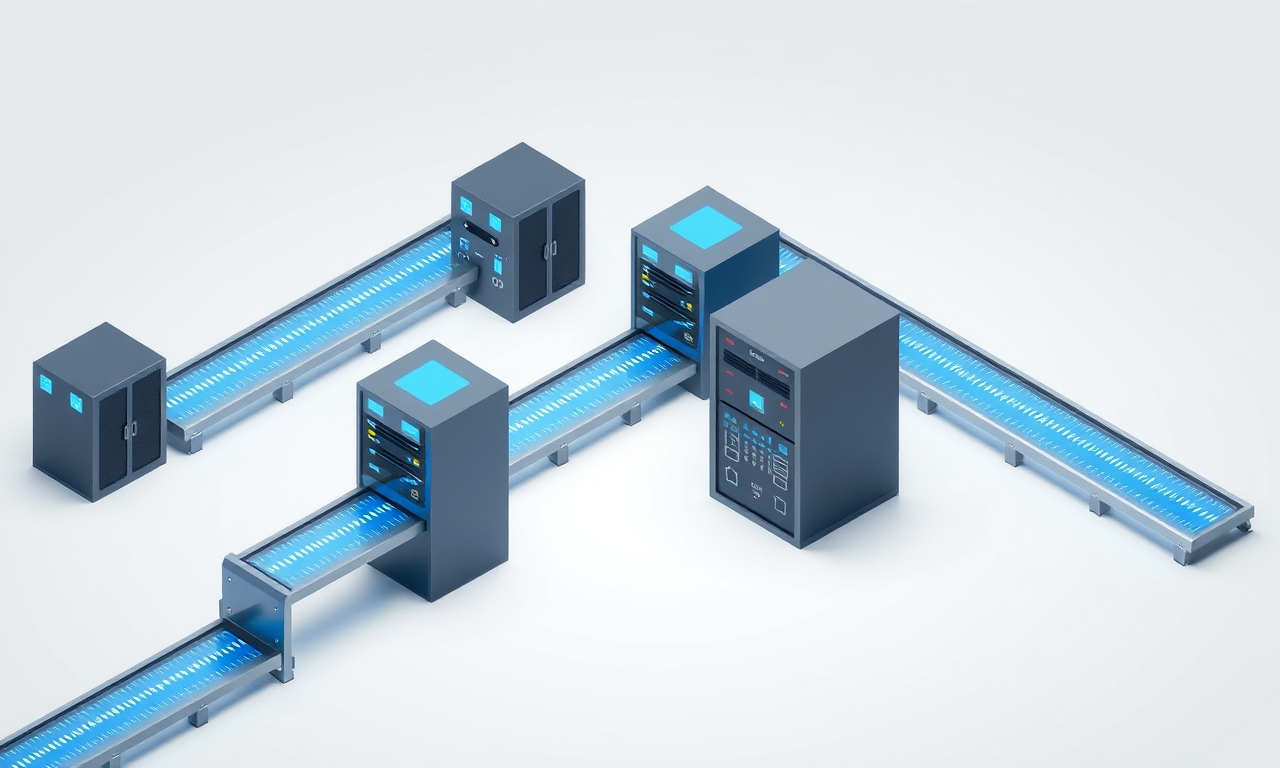
A feature factory ships user value. A studio factory ships the capacity to ship user value. These are fundamentally different business models.
Current development benchmarks paint a harsh picture. Teams without a dedicated Platform Engineering layer spend 35% to 40% of sprint capacity rebuilding internal tooling. They rebuild authentication. They rebuild billing. They rebuild notification systems. This is the "Studio Tax."
You pay this tax every time you start a new project without reusable primitives. Building in-house isn't the mistake. Building products without first building the machine that builds them is.
Why Your Best Engineers Waste Time on Repetitive Scaffolding
Senior engineers crave novelty. They want to solve hard problems. Forcing them to configure CI/CD pipelines for the tenth time burns morale.
This repetition creates hidden drag. Every hour spent on solved problems steals time from innovation. High-performing studios treat internal developer experience as a primary product. They reduce toil ruthlessly.
The Metric That Matters: Reuse Rate Over Release Frequency
Most studios track features shipped. This metric lies because it ignores infrastructure leverage.
Track new product setup time instead. This number should drop exponentially with each launch. If your third product takes as long to scaffold as your first, you aren’t a studio. You are just restarting.
Real leverage compounds. Read our analysis on Why 'Built From Scratch' Is the Only Real Moat for Your Product to understand this distinction. Custom code creates defensibility. Only reusable custom code creates velocity.
The Context Switching Trap in Multi-Product Environments
Polyglot engineering teams harbor a dirty secret. Cognitive load kills output faster than bad code.
Managing distinct products like a creator marketplace and an AI meeting platform simultaneously demands immense mental bandwidth. Each has unique domain models. Each has specific regulatory constraints. Each requires different architectural patterns.
Cognitive Load Theory Applied to Polyglot Engineering Teams
Recent research validates what senior devs have felt for years. Context switching between distinct domains reduces effective coding time by up to 40%.
The brain needs time to reload mental models. Every interruption forces a cold boot. Studios often treat engineers as fungible resources. They rotate developers across projects to balance load. This destroys flow state.
Domain Boundaries vs. Team Boundaries
Organizational structure must mirror cognitive reality. Conway’s Law applies doubly to studios.
Assigning a senior engineer to "help out" on a second project adds no capacity. It creates a synchronization tax. Output degrades on both projects. True efficiency requires strict domain isolation. Alternatively, use shared abstraction layers. Never rely on ad-hoc resource sharing.
Structuring Squads Around Mental Models, Not Just Tech Stacks
Tech stack alignment is insufficient. Domain alignment matters more.
A team owning influencer verification logic thinks differently than a team owning real-time AI transcription. Grouping them by backend language ignores this friction. Structure squads around bounded contexts. Protect their attention as fiercely as you protect your production database.
Architectural ownership includes owning the boundaries of attention. We explore this concept deeply in The Architect’s Advantage: Why Building Your Core Product In-House Is the Only Moat That Lasts. Attention fragmentation erodes that moat.
Perfectionism Debt: When Obsessive Detail Becomes a Liability
Craftsmanship is a virtue. Misapplied craftsmanship is a vice.
High-performance teams accumulate aesthetic debt. They optimize non-core architecture prematurely. They mistake technical elegance for product-market fit. Product ops audits show this delays MVP validation by months compared to outsourced counterparts.
Identifying Non-Core Architecture Premature Optimization
Ask one question before polishing any internal system: Does this directly validate our core hypothesis?
If the answer is no, stop. Over-engineering authentication for an unproven marketplace is waste. Building a bespoke video pipeline before securing creator supply is waste. Apply production-grade standards only to production-grade problems. Validation phases demand validation-grade rigor.
The "Good Enough" Threshold for Internal Tooling
Internal tools serve developers, not customers. Their quality bar differs.
Ugly admin panels work fine if they function correctly. Perfect pixel alignment on internal dashboards steals time from user-facing polish. Define explicit quality thresholds for each tier. Communicate these standards clearly. Ambiguity breeds perfectionism debt.
Decoupling Craftsmanship from Validation Cycles
Real craftsmanship knows where to obsess. It also knows where to cut corners.
Apply the same balancing logic used in content systems to product development. Our guide on The Content Automation Stack: A Step-by-Step Guide to Building a System That Doesn't Sacrifice Quality for Speed illustrates this principle. Quality and speed are not opposites. They are variables requiring conscious calibration.
The Tacit Knowledge Crisis in Bespoke Development
"We built it ourselves" carries a hidden risk. It often means "Only Dave understands it."
Bus factor risk is critical in bespoke environments. Studios lacking automated documentation-as-code workflows lose significant operational velocity during turnover. Tacit knowledge resides in heads, not repositories.
Why "We Built It Ourselves" Often Means "Only Dave Understands It"
Custom code lacks community documentation. There are no Stack Overflow threads for your proprietary framework.
New hires face a steep learning curve. Senior architects become bottlenecks. Every departure resets collective IQ. This personnel lock-in is more dangerous than vendor lock-in. Vendors can be replaced. Lost institutional memory cannot.
Documentation-as-Code as a Non-Negotiable Standard
Treat documentation like production code. Version it. Test it. Review it.
Wiki pages rot instantly. Docs living next to code stay relevant. Automate generation where possible. Make documentation part of the definition of done. No merge should occur without updated context.
Automating Institutional Memory Through Testing and Linting
Code comments explain what. Enforced patterns explain why.
Use linting rules to encode architectural decisions. Write tests that document expected behavior. These artifacts survive personnel changes. They provide objective truth independent of human memory.
Communication architecture preserves knowledge. Our piece on Stop Treating Email Like a Bulletin Board: Architecting Agentic Communication That Doesn’t Burn Your Domain connects communication flows to knowledge retention. Chaotic communication accelerates knowledge loss.
Misaligned Incentives: Rewarding Output Instead of Leverage
Traditional agile metrics punish platform work. Story points measure user-facing features. Infrastructure improvements rarely generate points.
Successful studios flip this script. They explicitly incentivize toil elimination. They treat internal efficiency as a product feature.
Why Story Points Fail in Studio Environments
Story points assume linear value delivery. Platform engineering delivers exponential leverage.
Reducing build times by half might take three sprints. It generates zero user stories. Yet it accelerates every future sprint. Measuring this work with standard metrics undervalues it. Engineers avoid it. Infrastructure decays.
Measuring Platform Health as a Leading Indicator
Track developer experience metrics instead. Measure deployment frequency. Track change failure rate. Survey developer satisfaction.
These indicators predict future velocity. They validate platform investments. DORA metrics adapted for platform teams provide the framework. Use them.
Aligning Engineering KPIs with Business Compounding
Business value compounds through leverage. Engineering KPIs must reflect this.
Set OKRs around capability expansion, not just feature delivery. Celebrate infrastructure wins publicly. Make platform health visible to leadership. Operational workflows require different measurement than feature work. Our breakdown of The Operational Workflow That Makes or Breaks a Creator Marketplace demonstrates this distinction.
The Integration Fallacy: Assuming In-House Means smooth
Ownership breeds complacency. Teams assume internal integrations need no formal contracts. They own both sides, after all.
This assumption creates fragile coupling. A change in the meeting platform breaks the creator marketplace. Internal integrations require stricter governance than external ones. There is no SLA to hide behind.
API Contracts Between Internal Products Are Still Contracts
Treat internal services like third-party vendors. Define schemas explicitly. Version APIs rigorously.
Implicit dependencies cause cascading failures. Document contracts in machine-readable formats. Validate them automatically. Trust but verify, even internally.
Managing Versioning and Backwards Compatibility Internally
Breaking changes hurt internal teams too. Deprecation cycles matter.
Coordinate releases across product boundaries. Maintain backwards compatibility windows. Communicate changes proactively. Internal customers deserve the same respect as external ones.
Treating Internal Services with External Rigor
Microservices anti-pattern literature warns against internal coupling. Heed these warnings.
Email infrastructure provides a cautionary tale. Our analysis of The Hidden Costs of Choosing the Wrong Email API for AI Agents illustrates integration rigor. Poorly specified internal APIs create identical pain. Ownership does not excuse sloppy contracts.
Scaling Craftsmanship Without Diluting Culture
Culture doesn't scale through mission statements. It scales through friction.
Making the wrong thing hard preserves quality. Making the right thing easy accelerates velocity. Studios relying on verbal tradition fail. Studios embedding taste into tooling survive.
Codifying Taste: Turning Subjective Standards into Objective Checks
Subjective code review feedback creates inconsistency. Automate style enforcement.
Linters catch formatting issues. Custom rules enforce architectural patterns. Tests validate behavioral expectations. Remove opinion from reviews. Focus human attention on design and logic.
Onboarding as a Product Experience
First impressions set cultural tone. Treat onboarding like a product launch.
Provide self-service environments. Offer interactive tutorials. Create clear progression paths. Reduce time-to-first-commit. Good onboarding encodes culture into action.
Maintaining Ownership Mentality at Scale
Ownership requires autonomy. Autonomy requires guardrails.
Empower teams within defined boundaries. Provide platform capabilities, not mandates. Let teams choose implementations within approved patterns. Balance freedom with coherence. Engineering culture scaling frameworks from elite organizations confirm this approach.
Diagnostic Checklist: Is Your Studio Healthy or Just Busy?
A healthy studio feels boring to senior engineers. Solved problems don't excite. Novel challenges do.
If every initiative requires heroic effort, you have systemic failure. Innovation shouldn't feel like emergency response.
5 Questions to Audit Your Infrastructure Leverage
- Does new product setup time decrease with each launch?
- Can junior engineers deploy safely without senior approval?
- Do platform improvements accelerate multiple products simultaneously?
- Is architectural knowledge codified or tribal?
- Do teams own their domains without excessive cross-team dependencies?
Answer honestly. Negative answers indicate leverage debt.
Red Flags in Sprint Velocity and Toil Ratios
Velocity should trend upward. Toil should trend downward.
Stagnant velocity despite hiring signals infrastructure drag. Increasing toil indicates platform neglect. Monitor these ratios monthly. Intervene early.
Assessing Bus Factor and Knowledge Distribution
Map critical knowledge holders. Identify single points of failure.
Rotate responsibilities deliberately. Pair program across experience levels. Document decisions asynchronously. Distribute ownership actively. Adapt the checklist format from our Influencer Marketing Buyer’s Checklist: 12 Things to Verify Before You Sign a Single Contract for internal auditing. Rigorous verification prevents costly failures.
Common Mistakes to Avoid
- Treating engineers as fungible resources: Rotating developers across projects to balance load destroys velocity through cognitive switching costs. Domain expertise requires sustained focus.
- Measuring platform work as overhead: Failing to incentivize toil elimination leads to infrastructure decay. Internal developer experience drives external product velocity.
- Relying on tribal knowledge: Assuming "we built it" means "we understand it" ignores bus factor risk. Codify architectural decisions through automated enforcement and documentation-as-code.
Frequently Asked Questions
How do we justify investing in internal platform engineering before shipping user features?
Frame platform work as risk reduction and velocity multiplication. Calculate the cumulative cost of manual scaffolding across planned products. Show how platform investment pays compound interest. Leadership understands ROI. Speak their language.
What metrics best indicate whether our in-house studio is gaining leverage over time?
Track new product time-to-first-deployment. Monitor developer satisfaction scores. Measure deployment frequency and change failure rate. These leading indicators reveal true leverage better than feature counts.
How do we balance obsessive craftsmanship with the need for rapid market validation?
Define quality tiers explicitly. Apply maximum rigor to core differentiators. Accept pragmatic solutions for commodity functions. Revisit validation-grade code only after proving market fit. Craftsmanship serves business goals, not ego.
Should internal products share a monorepo or separate repositories to reduce context switching?
Choose based on coupling, not convenience. Tightly coupled products benefit from monorepos. Independent domains thrive in separate repos. Tooling matters more than structure. Invest in workspace management regardless of choice.
How do we prevent senior engineers from becoming bottlenecks in a bespoke development environment?
Codify their knowledge relentlessly. Build self-service platforms. Create comprehensive documentation. Mentor juniors through structured programs. Make seniors redundant for routine tasks so they can focus on leverage multiplication.
Further Reading
- Why 'Built From Scratch' Is the Only Real Moat for Your Product – Understanding when custom development creates defensible advantage versus unnecessary complexity.
- The Architect’s Advantage: Why Building Your Core Product In-House Is the Only Moat That Lasts – close look into architectural ownership and attention boundaries.
- Platform Engineering Maturity Model (2026 Edition) – External framework for assessing internal developer platform capabilities and identifying improvement areas.
Building digital products from scratch demands obsessive attention to detail. Every line of code, every pixel, and every decision made internally carries weight. But craftsmanship without infrastructure is just expensive hobbyism.
If your studio struggles with velocity despite elite talent, the problem likely isn't people. It's leverage. At Lumorabuild, we conceive, design, and build digital products entirely from scratch while maintaining the infrastructure that makes repeated innovation possible.
Ready to build something that lasts? Start a conversation with our team.