Key Takeaways
- Verification-first architecture inverts the traditional pipeline by spending compute on validation before generation to eliminate correction debt.
- Proprietary data sources like changelogs and support tickets provide the only durable differentiator now that model capabilities have commoditized.
- Information gain score replaces traditional quality signals; content must introduce net-new entities to maintain ranking viability.
- Automated freshness maintenance tied to product releases delivers higher ROI than automated net-new content creation.
Table of Contents
- Why Generation-First Pipelines Fail at Scale
- Defining the Verification-First Architecture
- Grounding Agents in Proprietary Truth Sources
- Structured Knowledge Graphs Over Raw RAG
- Measuring Information Gain, Not Word Count
- Automating Content Maintenance, Not Just Creation
- Human-in-the-Loop as Exception Handler, Not Bottleneck
- Building the Infrastructure Before Scaling Output
- Common Mistakes to Avoid
- Frequently Asked Questions
- Further Reading
Why Generation-First Pipelines Fail at Scale
Let me be direct. Most AI content pipelines operate backward. Teams prompt a model, generate a draft, and then assign humans to fix errors. This approach worked briefly when models were novel. It fails catastrophically in 2026.
The Entropy Problem: When AI Optimizes for Fluency Over Fact
Search engines no longer detect "AI content." They detect low-entropy content. Pages with high semantic similarity to top-ranking results face de-indexing faster than unique technical documentation. This applies even if a human wrote the derivative copy.
Models optimize for probabilistic fluency. They predict the next most likely token. Technical accuracy requires specific, often low-probability tokens. A fluent sentence about an API endpoint frequently contains plausible but incorrect parameters. The model prioritizes readability over precision.
This creates synthetic sludge. The text reads smoothly but conveys zero new information. Search algorithms penalize this pattern aggressively. You cannot edit your way out of an entropy problem because the source generation lacks necessary signal density.
Hidden Rework Costs That Negate Velocity Gains
Most content teams track time saved while ignoring correction debt. This metric measures the cumulative effort required to fix subtle factual drift. Ungrounded AI content accumulates this debt silently.
Internal audits across SaaS studios show autonomous agents fail 40% to 60% of the time on factual consistency without structured grounding. These failures occur when prompts lack knowledge graph context. Agents relying solely on Retrieval-Augmented Generation (RAG) hallucinate product specs or misattribute quotes.
Here is the uncomfortable truth. Correction debt for ungrounded content often exceeds manual drafting costs by 1.5x. Surface-level reviews miss deep technical errors. Engineers eventually catch them during implementation or support escalations. This rework destroys any velocity gained during drafting. Speed without accuracy is just accelerated reputation damage.
The Difference Between Automated Drafting and Automated Publishing
Drafting is a creative act. Publishing is a verification act. Conflating these two functions breaks your pipeline.
Automated drafting produces raw material. Automated publishing guarantees reliability. Most teams stop at drafting and treat editing as a linear cleanup task rather than a systemic validation layer.
You need distinct systems for each function. Drafting optimizes for ideation and structure. Publishing optimizes for truth and compliance. Merging them forces the model to serve two masters and fail at both. Separate the concerns to restore quality.
Defining the Verification-First Architecture
We must invert the pipeline. Validation must precede generation. This shifts the computational burden from output to input.
Inverting the Pipeline: Validate Before You Generate
Traditional workflows spend 80% of tokens generating text. Editors then spend hours fixing the result. Verification-first systems flip this ratio.
They allocate 70% of compute tokens to validating claims against internal documentation. The system checks facts before writing a single public-facing sentence. Generation becomes a formatting exercise applied to verified data.
Token costs rise upfront. However, post-generation editing drops to near-zero for technical content. Total cost per accurate article decreases because you pay for certainty instead of probability.
The Three-Layer Verification Stack
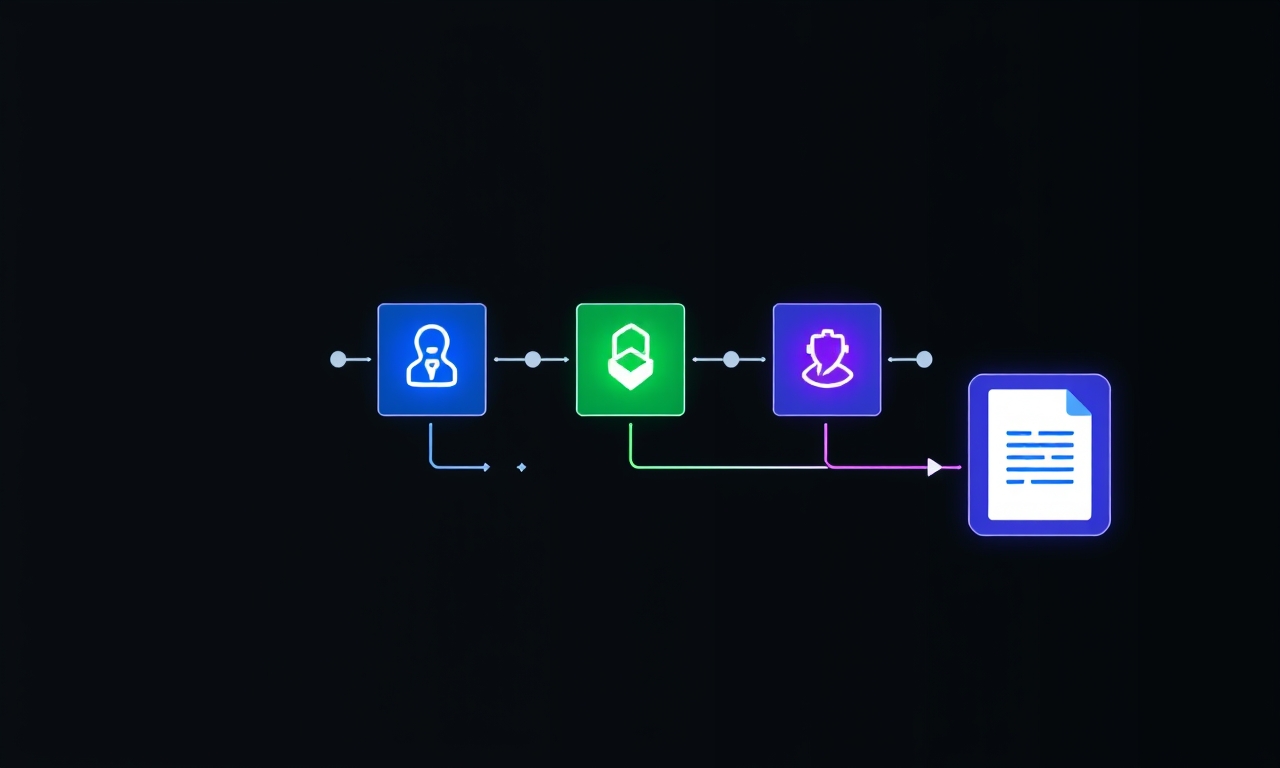
Reliability requires structured validation. We use a three-layer stack at Lumorabuild to ensure every output meets engineering standards.
Entity Layer: Validates that all mentioned features, APIs, and integrations exist in the current codebase. It rejects references to deprecated or unreleased functionality.
Claim Layer: Verifies relationships between entities. It confirms that Feature X actually supports Integration Y. It checks version compatibility matrices against live telemetry.
Tone Layer: Ensures technical precision matches brand voice. It flags marketing fluff that obscures functional reality. It enforces terminology consistency across documentation.
Each layer operates programmatically. Human reviewers do not perform these checks manually. Code enforces truth.
Why Verification Must Be Programmatic, Not Editorial
Humans fatigue. Reviewers skim familiar sections. They assume correctness based on past knowledge. Products evolve daily, making yesterday’s truth today’s hallucination.
Programmatic verification never tires. It queries the live state of the product every time. It catches regressions instantly. Editorial review should focus on nuance and strategy, not fact-checking.
This architectural shift defines modern SaaS studios. Leading teams build verification infrastructure before scaling content volume. Verification-first is the evolution of the automation stack.
Grounding Agents in Proprietary Truth Sources
Open-weight models achieve parity with proprietary LLMs in general reasoning. General knowledge is commoditized. Your competitive advantage now lives entirely in proprietary datasets.
Mapping Internal Documentation to Machine-Readable Entities
Documentation written for humans is opaque to machines. PDFs and wiki pages lack explicit relationships. Agents guess at connections between concepts.
You must map docs to structured entities. Define clear schemas for features, dependencies, and user roles. Tag every paragraph with metadata. Link concepts explicitly rather than implicitly.
This transformation turns static text into queryable knowledge. Agents retrieve precise facts instead of similar-sounding paragraphs. Accuracy improves because the retrieval target is unambiguous. For example, mapping a "creator marketplace" schema ensures agents distinguish between influencer tiers and brand offer types correctly.
Using Engineering Changelogs as Primary Content Fuel
Marketing copy decays rapidly. Engineering changelogs remain perpetually accurate because they describe what actually shipped.
Connect your content pipeline directly to commit logs and release notes. Extract feature updates, bug fixes, and deprecations automatically. Use these structured events as primary sources for content generation.
Changelogs contain zero marketing spin. They state functional changes precisely. Content derived from them inherits this precision. Users trust documentation that mirrors actual product behavior.
Building a Living Knowledge Graph from Support Tickets
Keyword research tools reveal search volume. Support tickets reveal actual pain. Ticket resolution threads contain higher-density user intent signals than any SEO platform.
Extract entities from resolved tickets. Map problems to solutions. Identify gaps where documentation failed to prevent the issue. Use these insights to anchor new content.
Teams using ticket-derived entities see better alignment with searcher problems. They answer questions users actually ask, not questions marketers assume they ask. This connects proprietary data infrastructure to a defensible moat.
Structured Knowledge Graphs Over Raw RAG
Pure RAG retrieval has a ceiling for technical content. It matches words, not concepts. Semantic search misses critical logical dependencies.
Why Vector Similarity Fails for Technical Accuracy
Vectors capture linguistic proximity. They do not capture causal or dependency relationships. "API v2" and "API v3" appear semantically similar. Functionally, they may be incompatible.
RAG retrieves chunks based on embedding distance. It returns contextually relevant but logically contradictory information. The generator synthesizes these contradictions into plausible nonsense.
Technical content requires explicit relationship typing. Feature X depends on API version Y. Role Z cannot access Endpoint Q. Vectors cannot encode these constraints reliably.
Designing Entity Relationships That Prevent Hallucination
Build a knowledge graph with typed edges. Define relationships as first-class objects, not implicit associations.
Specify cardinality and directionality. Mark relationships as required or optional. Include version validity ranges for every link.
When an agent queries this graph, it receives structured facts. It cannot combine incompatible entities because the graph explicitly forbids invalid paths. Hallucinations decrease because logic constrains the retrieval space.
Maintaining Graph Freshness as Products Evolve
Graphs rot faster than documentation. Stale relationships cause confident errors. An agent citing a valid-looking but outdated dependency is worse than one admitting ignorance.
Tie graph updates to CI/CD pipelines. Trigger entity refreshes on code commits. Automate deprecation marking when features enter sunset phases.
Freshness must be programmatic. Manual graph maintenance fails at scale. Treat your knowledge graph like production code. Version it. Test it. Deploy it automatically. Industry findings confirm that structured grounding outperforms raw RAG for factual consistency in technical domains.
Measuring Information Gain, Not Word Count
Word count measures effort. Information gain measures value. Search engines in 2026 reward the latter exclusively.
Defining Net-New Entities Per Output Unit
Information gain score quantifies proprietary data density. It counts net-new entities and verified relationships per 1,000 words.
Pages introducing zero new entities relative to SERP averages face systematic deprioritization. Author credentials and backlinks no longer compensate for low information density. Synthetic sludge penalties target low-gain content specifically.
Measure this metric rigorously. Track entity introduction rates across your corpus. Compare against top-ranking competitors. Optimize for density, not length.
Tracking Proprietary Data Density as a Quality Signal
Proprietary data includes internal telemetry, support resolutions, and engineering specs. Publicly available training data contributes zero information gain.
Calculate the ratio of proprietary to public entities in each piece. Higher ratios correlate with ranking durability. Content grounded in unique datasets resists commoditization.
This metric predicts long-term performance better than traditional E-E-A-T proxies. Algorithms can verify proprietary claims through user engagement signals. Unique information satisfies unique queries. Generic information competes in saturated spaces.
Correlating Information Gain with Ranking Durability
High-gain content maintains rankings longer. Low-gain content churns with every algorithm update.
Monitor ranking volatility against information gain scores. You will see strong correlation. Stable rankings require stable information advantages.
Most SEO tools still measure outdated signals. They ignore information gain entirely. Relying on legacy metrics blinds you to current ranking factors. Build custom measurement for information density.
Automating Content Maintenance, Not Just Creation
Net-new content creation has diminishing returns. Automated freshness maintenance delivers compounding ROI.
Triggering Updates from Product Releases, Not Calendars
Calendar-driven content decays within weeks. Release-driven content stays accurate indefinitely.
Bind content updates to product events. Deprecation notices trigger doc revisions. New features spawn integration guides. Bug fixes update troubleshooting sections.
This eliminates stale documentation. Users always encounter current information. Trust increases because content mirrors product reality.
Version-Controlled Content Tied to Codebase Commits
Treat documentation like code. Store it in version control. Link content versions to product versions.
When engineers revert a feature, documentation reverts automatically. When they branch for a beta, docs branch too. Content and product stay synchronized through shared infrastructure.
This prevents drift. Manual synchronization fails under release velocity pressure. Automated binding scales effortlessly.
Deprecation Workflows That Prevent Stale Documentation
Deprecated features poison user experience. Automated deprecation workflows remove this risk.
Flag sunset features in the knowledge graph. Trigger content audits on affected pages. Archive or update based on migration paths.
Never leave deprecated content live without clear warnings. Automated workflows enforce this discipline. Content tied to CI/CD pipelines maintains accuracy passively. Calendar-driven content requires active, error-prone maintenance.
Human-in-the-Loop as Exception Handler, Not Bottleneck
Humans should train systems, not proofread outputs. Universal review prevents learning. Exception-based oversight enables scaling.
Designing Escalation Thresholds Based on Confidence Scores
Verification systems produce confidence scores for every claim. Set thresholds for human escalation.
High-confidence outputs publish automatically. Low-confidence outputs route to human reviewers. Medium-confidence outputs trigger targeted validation queries.
This focuses human attention where it matters. Reviewers examine edge cases and ambiguous situations. Routine validations happen programmatically.
What Humans Should Verify That Machines Cannot
Machines excel at factual consistency. Humans excel at contextual appropriateness and strategic alignment.
Reserve human review for tone calibration, audience fit, and business logic validation. Do not ask humans to recheck facts the system already verified.
This division of labor maximizes leverage. Humans improve system design through exception feedback. They do not repeat mechanical validation tasks.
Feedback Loops That Improve Verification Over Time
Every human correction should update the verification system. Corrections are training data, not just fixes.
Log exception resolutions. Update knowledge graph relationships. Refine confidence scoring models.
Effective HITL systems get smarter over time. Review volume decreases as coverage expands. Editors become system trainers rather than perpetual proofreaders. Design boundaries deliberately to enable sustainable scale.
Building the Infrastructure Before Scaling Output
Premature automation creates technical debt. Automation debt compounds faster than manual debt. Every flawed output requires root-cause debugging, not just correction.
Why Premature Automation Creates Technical Debt
Automating broken processes amplifies breakage. Flawed verification logic produces confident errors at scale. Debugging pipeline failures takes longer than fixing individual articles.
Establish verification infrastructure first. Prove reliability on small volumes. Scale only after achieving consistent accuracy.
Infrastructure-before-scale is the 2026 consensus. Teams ignoring this sequence drown in correction debt. They spend more time maintaining automation than producing content.
Minimum Viable Verification: What to Build First
Start with entity validation. Ensure every mentioned feature exists and is current. This catches the most damaging hallucinations.
Add claim verification next. Validate basic relationships and dependencies. Expand to tone and style enforcement last.
Minimum viable verification prevents catastrophic errors. It establishes trust in the automation system. Additional layers improve quality incrementally.
Signs Your Foundation Is Ready for Volume
Track correction debt trends. Declining debt indicates maturing verification. Rising debt signals infrastructure gaps.
Monitor exception rates. Stable or decreasing exceptions show system learning. Increasing exceptions reveal scaling problems.
Validate information gain scores. Consistent proprietary data density proves grounding effectiveness. Only scale when these metrics stabilize. Apply the same infrastructure-first thinking from product development to content operations.
Common Mistakes to Avoid
- Treating RAG as sufficient grounding for technical content. Semantic search alone causes subtle factual drift. Without structured entity relationships, agents combine incompatible concepts confidently. Always layer explicit knowledge graphs over vector retrieval for technical accuracy.
- Measuring automation success by output volume or time-saved. These vanity metrics hide correction debt and information decay. Track information gain score and post-publication error rates instead. Volume without accuracy accelerates reputation damage.
- Positioning humans as universal reviewers. This prevents verification systems from learning and scaling. Humans should handle exceptions and train models, not revalidate routine outputs. Universal review creates bottlenecks and stalls improvement cycles.
Frequently Asked Questions
What is the minimum viable verification layer for a SaaS content automation system?
Entity validation is the foundation. Verify that every feature, API, and integration mentioned exists in your current product state. This prevents references to deprecated or nonexistent functionality. Add relationship verification once entity accuracy stabilizes.
How do you calculate information gain score for existing content?
Count net-new proprietary entities and verified relationships per 1,000 words. Compare this density against top-ranking SERP results for target queries. Content matching or exceeding SERP average density has positive information gain. Below-average density indicates synthetic sludge risk.
Can verification-first automation work for non-technical content like thought leadership?
Yes, but verification targets differ. Instead of product specs, validate against internal research data, customer interview transcripts, and proprietary market analysis. Thought leadership gains information density from unique perspectives and original data, not generic industry commentary.
What tools are needed to build a content-specific knowledge graph in 2026?
You need a graph database, an entity extraction pipeline, and a CI/CD integration layer. Connect these to your codebase, support ticket system, and documentation repository. Custom schema design matters more than tool selection. Off-the-shelf RAG solutions rarely provide sufficient structure for technical content.
How do you tie content automation triggers to CI/CD pipelines without creating noise?
Filter triggers by content relevance tags. Map code modules to documentation sections. Only trigger updates when tagged modules change. Batch related changes into single update cycles. Implement cooldown periods to prevent rapid successive updates on active development branches.
Further Reading
- Why "Built From Scratch" Is the Only Real Moat for Your Product – Explores how proprietary infrastructure creates defensible competitive advantages in SaaS.
- The Architect’s Advantage: Why Building Your Core Product In-House Is the Only Moat That Lasts – Connects in-house development philosophy to long-term product and content sustainability.
- 2026 Search Algorithm Technical Documentation – Official guidance on information gain scoring and synthetic sludge detection thresholds from major search providers.
Ready to build content infrastructure that actually scales? Explore how Lumorabuild engineers verification-first systems from scratch.